Questions?
We reply within 24 hours, free of charge.

The term "fractional ownership" by itself does not tell you what you are buying: the deal has to be checked against the contract and the registration documents, not against the name on the brochure. Depending on how the deal is put together, a buyer who signs up for a "fractional" villa or condo on Phuket can get, for example, a registered co-ownership share in a condominium unit, a registered lease (up to 30 years), a usufruct or superficies, either for a fixed term of up to 30 years or for the holder's lifetime (a usufruct ends on the holder's death), or shares in — or a contractual claim against — a company or platform that holds the property itself; these are examples, not an exhaustive list, and the building itself can sometimes be owned outright even where the land cannot. What matters legally is both what ends up registered at the Land Office and in whose name, and whether the structure behind that registration is itself lawful: a registered right obtained through an unlawful arrangement can still be unwound. No version of this gives a foreigner land, and a structure that uses Thai nominees to hide foreign control is a crime, whatever the brochure calls it.
In short
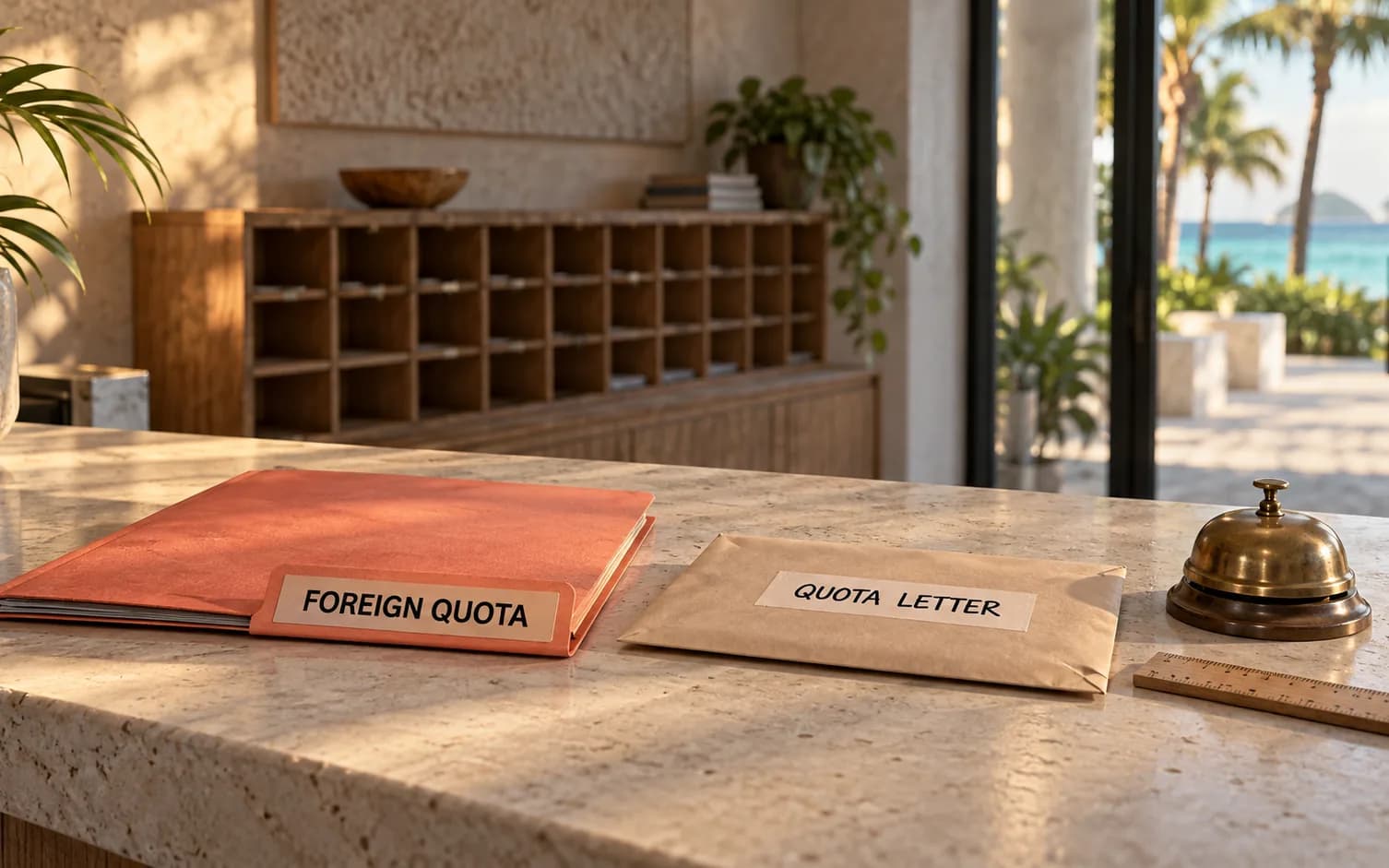
- If a fractional condo deal gives you a registered co-ownership share in the unit, that share counts inside the 49% foreign quota — check what is actually being registered.
- A fractional villa deal may give you a lease, a usufruct or a stake in a company, depending on the contract — never the land itself.
- Tokens and crowdfunding pools are not registered at the Land Office; the buyer holds a claim against the operator, not a right in the property.
- Pre-agreed "30+30+30" lease renewals and "99-year leases" are marketing promises, not enforceable rights today.
- Before paying, ask what exactly will be registered, in whose name, and what happens to your share on resale, on your death, or if the operator closes.
What is sold as fractional ownership
The word "fractional" covers at least four different legal shapes. Only the first two put anything in your own name at the Land Office.
| Model | What is registered | Whose name is on the title | Quota or nominee rule | Main risk |
|---|---|---|---|---|
| Share of a condo unit | Co-ownership on the condominium title | Each co-owner, foreign buyer included | Counts inside the 49% foreign quota | How several unrelated foreign co-owners are counted is not confirmed from a published rule; check with the Land Office before paying |
| Pooled lease over a villa | A registered lease, up to 30 years | The named lessee(s) | No quota, but the land stays Thai-owned | Renewal needs a fresh agreement, never guaranteed |
| A company holds the villa | Nothing in the buyer's name at the Land Office | The company, on the Thai title | Must pass the Foreign Business Act's foreign-shareholding test, and the Land Code's own tests where the company holds land | Nominee shareholders, criminal exposure |
| Token or crowdfunding pool | Check the specific product's documents | Check the specific product's documents | Not yet checked against a settled rule | Check the documents for what you actually hold against the operator |
A share of a condo and the 49% quota
A condominium unit can be registered to several co-owners, and co-ownership itself works under ordinary civil law: shares are presumed equal unless the deed says otherwise, each co-owner can sell his own share freely, but the whole unit can only be sold with everyone's consent; a co-owner can generally demand partition, subject to the limits set by the Civil and Commercial Code, and an agreement not to partition binds the co-owners for no more than 10 years (ss. 1357, 1361, 1363).
A foreign co-owner's share is still measured against the 49% foreign quota set by the Condominium Act, s. 19 bis: the floor area held by foreigners in the whole registered building cannot exceed that limit. A buyer who qualifies under s. 19 by remitting foreign currency also has to show that the purchase money arrived from abroad and was converted to baht through a Thai bank, with a document from that bank showing the purpose of the transfer; a buyer who qualifies on another s. 19 basis, such as lawful permanent residence, is checked against that basis instead. How the Land Office counts a unit held by several unrelated foreign co-owners against the quota is not something we could confirm from a published rule; our lawyers check this at the Land Office before you commit a reservation fee, rather than after.
A share of a villa: company, lease or fund
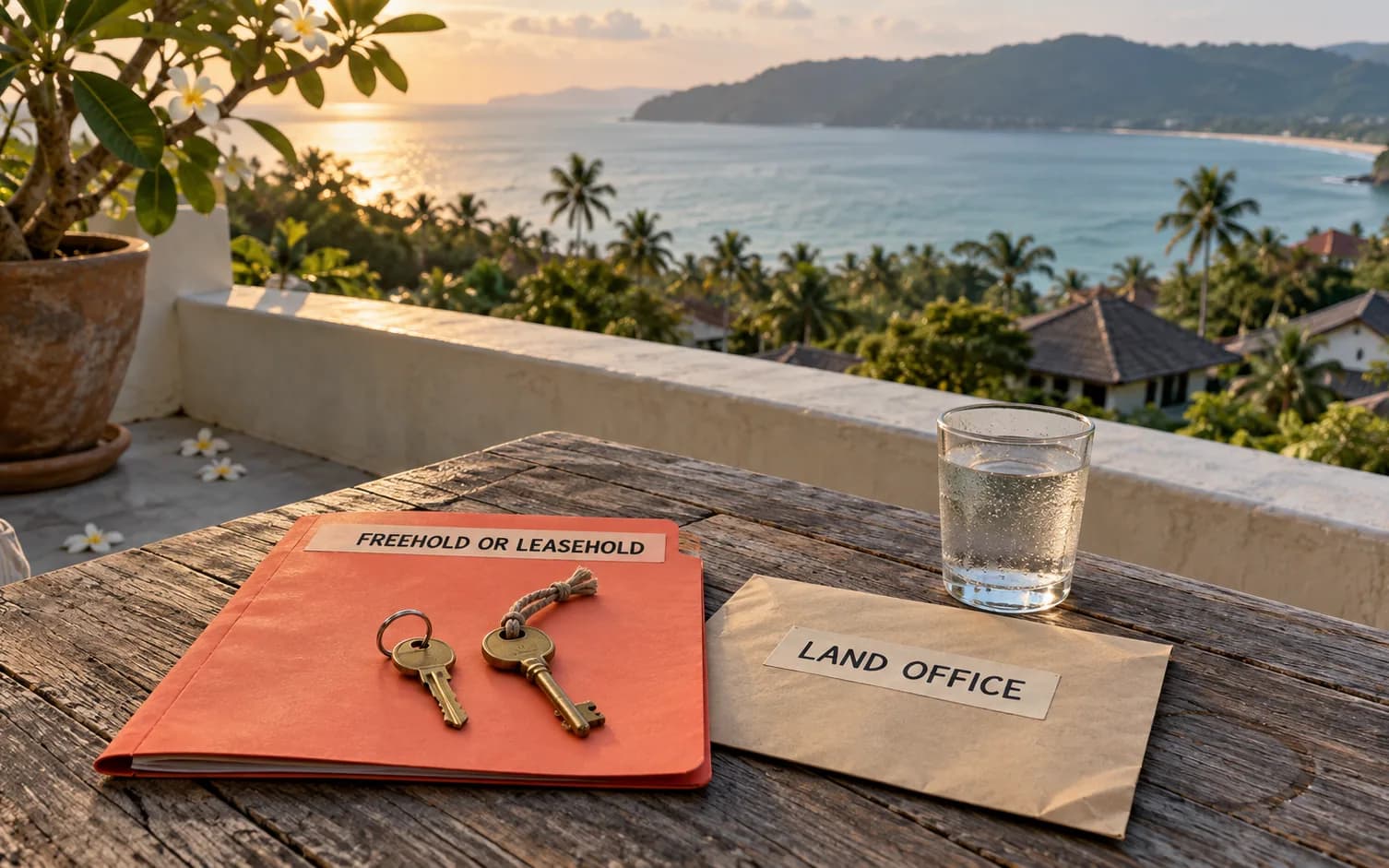
Land Code s. 86 keeps land ownership closed to foreigners, whatever label a "fractional" deal uses. The lawful ways to hold a real right over a villa or its land are the same ones available to any buyer: a lease registered for up to 30 years (CCC s. 540), a usufruct, a superficies, or the transferable and inheritable Sap Ing Sith right created by the Rights over Leasehold Asset Act B.E. 2562 — also capped at 30 years. Buying a villa on a leasehold like this is a normal, common way to buy on Phuket; the legal point to watch is how renewal, transfer and inheritance are worded in the contract, since none of these rights extend themselves automatically.
A "fractional" villa deal can run, for example, one of two ways: several buyers become co-lessees on one registered lease, which needs checking with the Land Office in advance for that specific group of lessees, or a company holds the villa and buyers get shares or a contractual stake in it. The company route is only lawful if the Thai shareholders genuinely hold and control their shares; where they are nominees for a foreign owner, both sides breach the Foreign Business Act, s. 36. We cover how that risk is checked and unwound in a villa held through a nominee company.
Tokens and crowdfunding: what is known
If an offer is built on tokenised shares or a crowdfunding pool, we have not researched the securities and digital-asset rules that may apply, so we are not going to describe a regulatory position we have not checked. What civil law does say is firm: a sale of land, a house or a condominium unit is valid only when made in writing and registered at the Land Office (CCC s. 456); until that registration happens, a buyer's payment is only a claim against the seller, not ownership, and if the seller instead registers the property to a later buyer who paid and acted in good faith, the earlier buyer generally cannot undo that registration (CCC s. 1300). A token or a crowdfunding certificate does not by itself register anything at the Land Office. Whether a given token is lawfully issued and sold, and what it actually gives the holder, has to be checked against that specific product's own documents before you pay, not after.
Red flags in the contract
Checking an offer before you pay
Before signing anything, we suggest you ask for, and check:
- A certified copy of the chanote or the condominium title from the Land Office, not a photo from the seller.
- The condominium juristic person's current quota letter, if the deal is a condo share.
- The company's registration and shareholder data at the Department of Business Development, if the deal runs through a company.
- What exactly will be registered, and in whose name — a right on the title, or only a contract.
- What happens to your share if you want to sell it, if you die, or if the operator closes down.
Phuket areas
The same laws apply across the island, but each area has its own particulars: what kind of property usually sells there, which documents prove rights to the land and what deserves a closer look before you buy.

Kata
In sea-view condominiums the 49% foreign quota usually runs out quickly, so we check it before you reserve a unit.

Patong
People buy condos here to rent out and open businesses that need licences.

Kamala
There are many branded residences here, homes sold under a hotel brand, and the management agreement needs careful reading before you buy.
Old Town
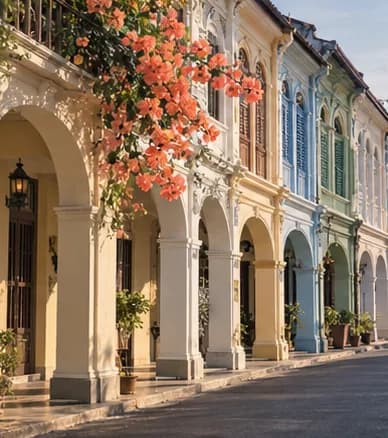
Many historic shophouses, buildings with a shop on the ground floor, are protected and can only be restored under special rules.