Questions?
We reply within 24 hours, free of charge.
You cannot pay the Land Office in crypto. Crypto is not legal tender in Thailand, and a foreigner registering a freehold condo under the foreign quota usually has to show that the purchase money arrived from abroad in foreign currency and was converted to baht by a Thai bank. The usual proof is a bank document such as the FET form (formerly called Thor Tor 3). So the lawful route to buy property in Thailand with crypto is to sell it first, then send the proceeds by a normal international bank transfer.
In short
- You cannot pay a Land Office registration in crypto.
- Qualifying to register a condo as a foreigner usually means paying with money that arrived from abroad and was converted to baht, backed by an FET form or a similar bank document — sending crypto straight to someone does not create that proof.
- Sell the crypto before you send any money for the purchase.
- A developer who says it "accepts USDT" is asking you to take on the registration risk yourself.
Can you pay for Thai property in crypto
Not directly. The Bank of Thailand does not recognise crypto as legal tender. A foreigner usually qualifies to register a condo by paying with foreign currency that arrived from abroad and was converted to baht by a Thai bank — one of the grounds under section 19 of the Condominium Act, alongside lawful permanent residence. A direct crypto transfer does not create the bank-verified proof that ground needs.
You may have read about TouristDigiPay, a regulatory sandbox run by the Securities and Exchange Commission, the Bank of Thailand and the Ministry of Finance. It lets tourists convert crypto into baht inside a regulated e-wallet and pay merchants by QR code, with monthly caps per vendor. It was built for everyday spending, not for a Land Office registration, and we have not found an official source confirming that it is live or that Phuket has a formal pilot. Do not plan a property purchase around it.
Why the Land Office needs baht and an FET
The Condominium Act B.E. 2522, section 19, lets a foreigner own a unit only if the foreign-owned share stays within 49% of the building's total saleable unit floor area (not the whole building, and not a count of units), and only if the buyer qualifies — in most cases, by paying with money remitted from abroad in foreign currency. Without a bank document showing that, the Land Office will not register the unit in your name.
That document is usually the FET form or a bank credit advice naming you as sender or recipient, with the purpose of payment stated as the purchase of the unit. Sources disagree on the exact amount that triggers an FET rather than a simple credit advice. Because of that, we recommend getting a bank document for every transfer, whatever the amount, rather than relying on a threshold that may not hold up at the Land Office.
The lawful route: convert abroad, then transfer
A straightforward way to turn crypto into a registrable condo purchase:
- Sell the crypto on an exchange outside Thailand.
- Move the proceeds to your own bank account abroad.
- Transfer the money in foreign currency to a Thai bank, to your own account or the developer's, from that account.
- State the purpose of payment and the unit number on the transfer.
- Ask the bank for an FET form or credit advice for each transfer, and keep the originals.
Before you pay anything, check that the building still has room in its 49% quota — it can change between an early check and the day you pay, so checking the 49% quota before you pay is worth doing close to the transfer date, not only at the start.
When a developer "accepts USDT": the risks
| Payment method | Bank document for the Land Office | Registration risk |
|---|---|---|
| Bank transfer from abroad, after selling crypto | Confirm with the bank beforehand | Lower, once the bank confirms it can issue proof and the quota and your qualification under section 19 are checked |
| USDT sent straight to the developer's wallet | No | High — no proof of funds from abroad |
| Cash or a P2P deal, no bank record | No | High — same problem, plus no paper trail |
If a developer says it "accepts USDT", check how the payment would actually move before you agree to anything. Sending crypto straight to a seller's wallet, on its own, does not create the bank-verified proof of an inbound transfer from abroad that the registration needs. You cannot assume a bank will issue that proof afterwards for money that never passed through the banking system — settle this before you pay, not after. If the registration is refused, you have already paid and do not own the unit.
We suggest reading how to check a developer and property before you pay alongside this: payment method and quota checks belong in the same conversation with the seller. A typical situation assembled from practice — the quota running out a week before closing — shows why timing both checks matters.
Crypto tax when you buy
Thailand exempts capital gains on digital assets from personal income tax from 1 January 2025 to 31 December 2029 — but only for sales made through Thai exchanges, brokers and dealers licensed by the Securities and Exchange Commission. Unlicensed platforms, DeFi, peer-to-peer deals outside a licensed operator, and staking rewards are not covered. Confirm the exact conditions with the Revenue Department before relying on this for a specific sale.
If you are a Thai tax resident (180 days or more in a calendar year), assessable foreign-sourced income earned in a year you were a Thai tax resident — which can include a gain made abroad — is taxable when you bring it into Thailand, for income arising from 1 January 2024 onward. How the Revenue Department treats a gain from crypto sold on a foreign exchange and then remitted is not something we have found specific official guidance on. If the sum is significant, we discuss the tax side with you before you transfer, rather than after.
Whether you owe tax elsewhere too depends on your tax residence and other grounds for taxation in the countries involved, not just where you sold. We don't cover those rules here — ask an adviser in your own country before a large sale.
What to do next
Selling crypto and wiring the proceeds is simple on paper, but the paperwork the Land Office wants, and the order you do things in, is where buyers get stuck. In a 45-minute consultation, our team will explain what documents the Land Office is likely to ask for in your case and how to time the transfer against the quota check.
If you already have a booking contract or a draft sale agreement, send it over — we offer a free review within 48 hours and flag anything in the payment clause that could cause trouble at registration. The same team can also handle the legal side of buying a condo in Phuket, including the bank transfer and the registration itself, and the taxes and fees due on a condo purchase once the quota and payment are sorted.
Phuket areas
The same laws apply across the island, but each area has its own particulars: what kind of property usually sells there, which documents prove rights to the land and what deserves a closer look before you buy.
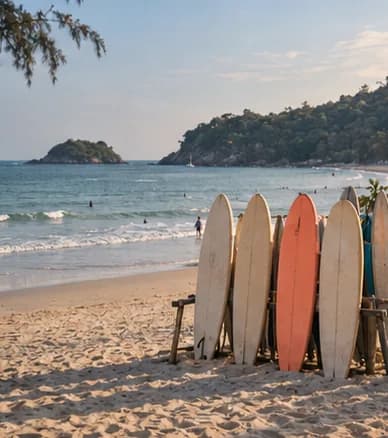
Kata
In sea-view condominiums the 49% foreign quota usually runs out quickly, so we check it before you reserve a unit.

Patong
People buy condos here to rent out and open businesses that need licences.

Kamala
There are many branded residences here, homes sold under a hotel brand, and the management agreement needs careful reading before you buy.
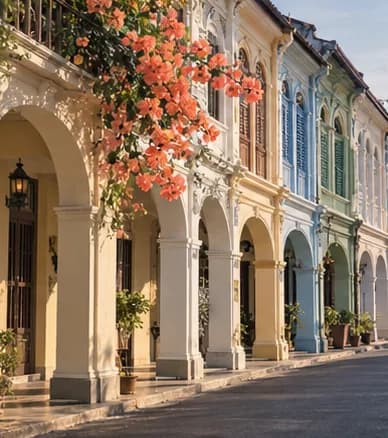
Old Town
Many historic shophouses, buildings with a shop on the ground floor, are protected and can only be restored under special rules.