Questions?
We reply within 24 hours, free of charge.
Contents
- In short
- What property can foreigners own in Phuket?
- Can foreigners buy land or use a Thai company?
- Are 99-year leases and a 75% foreign quota available in 2026?
- Buying property in Phuket as a foreigner: what should you check before paying a deposit?
- What taxes and fees should a foreign buyer budget for?
- What can a lawyer check before you commit?
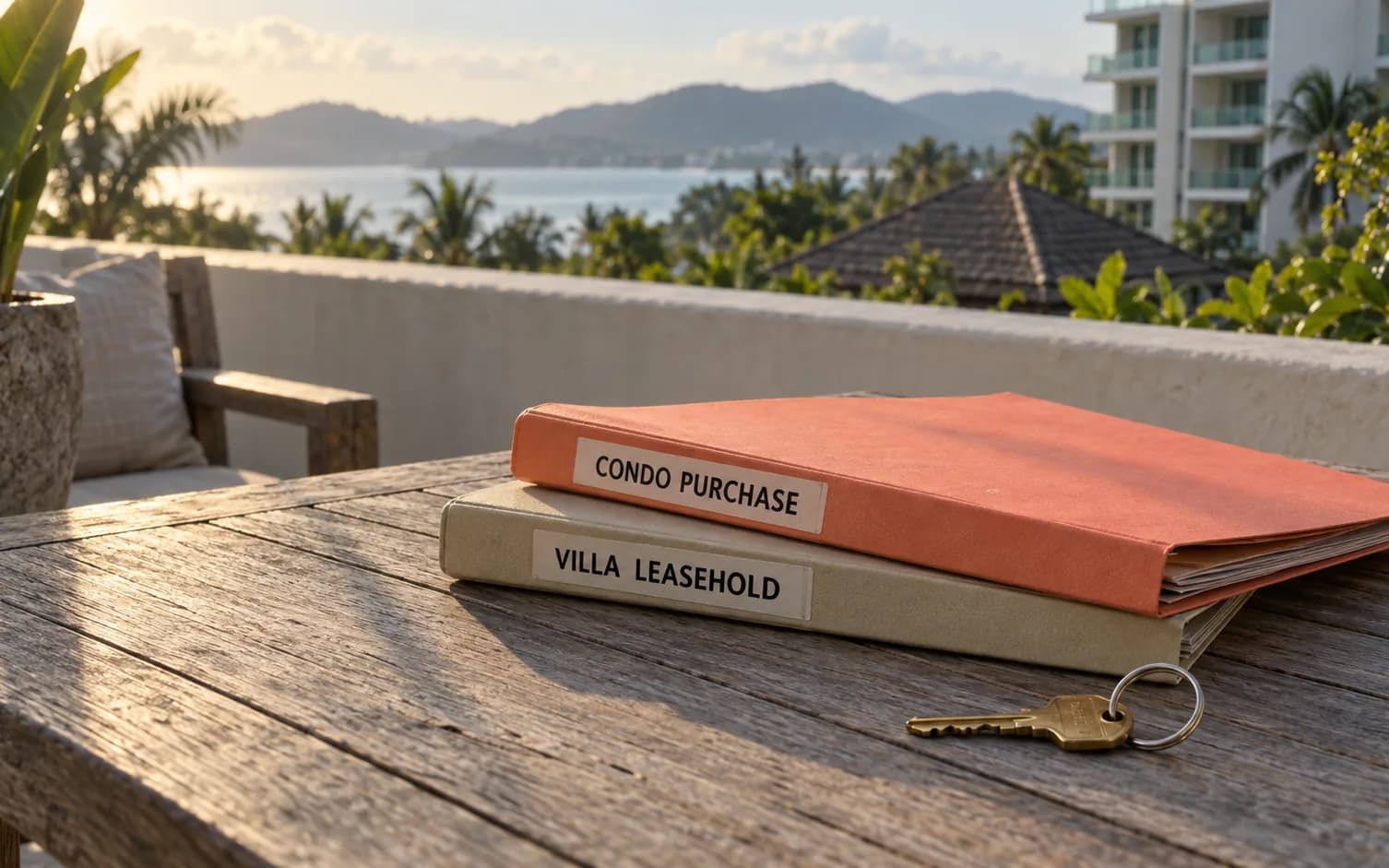
Yes, with limits that depend on the type of property. A foreigner can own a condominium unit in Phuket outright if they meet the eligibility requirements of the Condominium Act and foreign ownership in the building stays within 49% of its total saleable floor area. Foreigners generally cannot own land, so a villa is usually bought on a leasehold: a lease of the plot registered for up to 30 years, often with a separate right to own the house. The 75% condo quota and 99-year leases are proposals, not law, and a "30+30+30" clause does not give 90 years of registered rights.
On this page
- In short
- What property can foreigners own?
- Land and Thai companies
- The 99-year and 75% proposals
- Checks before a deposit
- Taxes and fees
- What a lawyer can check
In short
- You can own a condominium unit in your own name if you meet the buyer eligibility requirements and there is space within the 49% foreign quota.
- A villa is usually bought on a leasehold: the lease of the plot is registered for up to 30 years, and a separate registered right can give you ownership of the house.
- A renewal after the first 30 years needs a new agreement at that time. We look at how the renewal clause is written before you sign.
- Thai nominee shareholders cannot lawfully hold land for you, and company paperwork does not make a nominee arrangement lawful.
- Check the title, the seller, the quota where relevant, the contract, the bank documents and the split of costs before you pay, then repeat the checks that can change before registration.
What property can foreigners own in Phuket?
Foreigners can own property in Thailand, but "property" covers several different rights. A condominium title, a leasehold and a right over a building each give you something different. The useful question is what will be registered in your name, over which asset and for how long. A brochure that says "ownership" or "freehold" does not answer it.
The table below sets out the main rights side by side. Use it to work out which documents to ask for before you compare homes; it is not a suggestion to combine every right on the list.
| Right | What you receive | Main limit | What to check |
|---|---|---|---|
| Freehold condominium | Ownership of the condominium unit | Buyer eligibility and the 49% foreign floor-area quota under the Condominium Act | Unit title, quota confirmation, seller's authority and bank evidence |
| Leasehold (registered lease) | The right to use the property for the registered term | One term of up to 30 years under Civil and Commercial Code section 540; a renewal needs a new agreement | Registered term, property description, permitted use, renewal and transfer clauses |
| Superficies | Ownership of a building on another person's land | Up to 30 years or the holder's life under sections 1410–1416; registration required | Building rights, land title and how the right fits the lease of the land |
| Usufruct | Possession, use and income from another person's property | A fixed term of up to 30 years or the holder's life; a lifetime right ends at the holder's death; registration required | Registered scope, duration and whether it suits the intended use |
| Land ownership | Ownership of the plot itself | Generally unavailable to foreigners; narrow statutory exceptions need separate approval | Legal eligibility and approval, not a seller's promise |
Condo ownership and the 49% quota
Under section 19 of the Condominium Act, an eligible foreign buyer can acquire a unit within the foreign ownership quota. The quota is measured by floor area, not by the number of apartments. Counting foreign names in the building, or hearing that "fewer than half the units are foreign owned", does not tell you whether your purchase fits.
Your own eligibility is a separate question. One route is to bring the purchase money from abroad in foreign currency; lawful permanent residents are another qualifying category. Find out which route applies to you and what evidence the Land Office will ask for at registration. A seller's confirmation that quota space exists does not settle it.
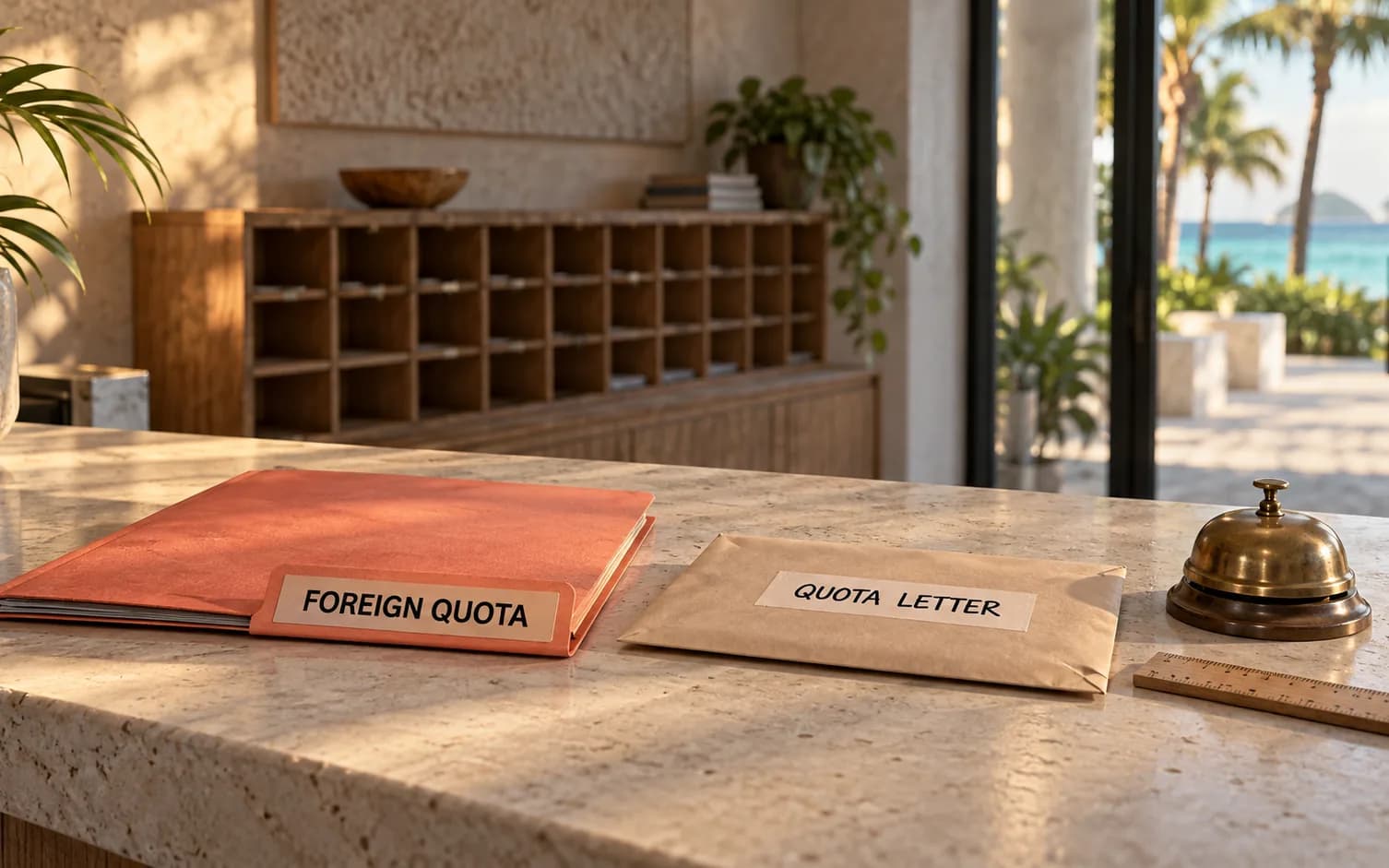
The quota is confirmed by the condominium juristic person's quota letter, the Land Office records and, where relevant, the developer's confirmation. Each check is only good for its date, because availability can change between reservation and registration. We advise asking for a contract clause that says what happens if the foreign freehold transfer cannot go ahead. Our guide to checking the 49% quota covers this in more detail.
Suppose you have chosen a completed unit and the seller sends a recent quota letter. That letter is a good start, but you still need the title and contract checks, the evidence for your eligibility route and an updated quota position before registration. Each of these checks answers a different question, and none of them replaces another.
Buying a villa on a leasehold
For a foreign buyer, a registered leasehold is the usual way to buy a villa in Phuket. Legally, it works like this. The land stays with its Thai owner. The lease of the plot is registered at the Land Office, and one term can run for up to 30 years. A registered superficies under Civil and Commercial Code sections 1410–1416 can give you ownership of the house itself on that land. Together, the two rights give you the home and the plot it stands on for the registered term.
Renewal is the point buyers ask about most. You can extend the lease after the first 30 years only by signing a new agreement at that time, and nobody can guarantee it in advance. That is why our lawyers read how the renewal clause is written in the contract now: that wording decides what you can rely on in 30 years.
We also check the other terms that give a leasehold its value. They include whether you can sell or transfer the lease and on what conditions, how the contract deals with your death and names your heirs or successors, whether both rights are actually registered, and which title document the land is held under. Ask for documents covering the land, the lease and the house. If the land lease runs for 30 years, find out how the building right fits that term and what the contracts say about expiry.
Usufruct serves a different purpose. Under section 1417 and the sections that follow, it gives possession, use and income from another person's property. A lifetime usufruct ends when the holder dies, so the intended use and duration matter if you are buying with your family's future in mind. Settle these goals before choosing a structure. The freehold and leasehold comparison is a useful next step when you compare offers.
Can foreigners buy land or use a Thai company?
Foreigners generally cannot own Thai land. Section 86 of the Land Code allows ownership where a treaty grants it, but no treaty in force gives foreign buyers that right, including US citizens. An American buyer should not read the Treaty of Amity's business rights as permission to buy a residential plot.
Section 96 bis contains a narrow exception for residential land: up to one rai, for a foreigner who invests at least THB 40 million in approved assets and receives permission from the Interior Minister. It does not mean that anyone can buy a villa that costs THB 40 million. The investment in approved assets and the minister's permission are requirements in their own right, separate from the price of the home. Anyone considering this route needs an eligibility review before committing to a plot.
A company needs scrutiny beyond the percentages on its shareholder list. Nominee arrangements breach section 36 of the Foreign Business Act. Thai shareholders who only lend their names do not make a foreign buyer's landholding lawful, and buying shares in an existing company does not remove the need for that review.
In 2026 the Department of Business Development (DBD) and the Department of Lands tightened their document checks. DBD Order No. 2/2569, in force from 1 August 2026, applies when a partnership or company is incorporated with a foreign partner or shareholder holding under 50%, or when a Thai-owned company appoints a foreign authorised director; it requires evidence tracing how the Thai shareholders paid for their shares, and an existing company faces the same check when it registers an amendment. We check whether the order applies to a specific structure and what DBD will ask for before you rely on it. Department of Lands directions issued from 15 May 2026 cover land acquisitions and source-of-funds checks, and Phuket is among the priority provinces. These measures look at the substance and funding of a structure; they do not create any new right to own land.
BOI promotion under the Investment Promotion Act can support landholding for an approved business activity, subject to its eligibility and approval requirements. It is not a general permission to own a personal villa. A Foreign Business Licence deals with business permissions and is not a residential land title. If a seller brings up either route, ask which approved activity or permission applies and why it is relevant to this purchase.
Our separate article on nominee-held villas and lawful alternatives covers the company issue in detail. For a purchase decision, the main question stays the same: which lawful right can be registered in your name over this property?
Are 99-year leases and a 75% foreign quota available in 2026?
No. The higher condo quota and 99-year lease terms are proposals and have not become law. The condo limit is 49%, and one registered lease term is limited to 30 years under section 540 of the Civil and Commercial Code. A purchase plan should not depend on a future amendment.
The longer-term proposal involved changes to a separate framework, the Sap Ing Sith right over leasehold assets. Policy discussion does not lengthen the lease you are being offered today. If sales material mentions 99 years, ask which current legal right and which registration support that description.
A "30+30+30" clause raises a related issue. Supreme Court judgment No. 4655/2566, which became public in March 2025, held that renewals agreed in advance to get round the 30-year limit are invalid. A renewal is made by a new agreement when the term ends, and that agreement cannot be guaranteed today.
When comparing offers, value the registered term on its own and treat any renewal as a possibility. A seller may describe a long relationship or an intention to renew, but neither adds registered years now. A practical test is to ask what the property is worth to you if the lease is not renewed. That is a budgeting question, not a forecast of what the parties will do.
Read our guide to the 30+30+30 ruling before relying on a renewal clause. Transfer, inheritance and renewal are three separate questions in a contract review; the answer to one does not settle the others.
Buying property in Phuket as a foreigner: what should you check before paying a deposit?
Start with a set of documents tied to the exact unit or plot. Ask the seller for the title, evidence of their authority to sell, the draft reservation and purchase agreements, and the documents for the right you are buying. Keep the brochure and any written promises with them, so you can compare what was promised with what the contract says.
Check the title and recorded burdens
Get a certified copy of the title and a Land Office search for mortgages, encumbrances, disputes and seizure. Confirm that the property described in the agreement is the one you inspected. A photograph of the title deed will not show whether a later entry affects the sale.
Land documents also differ in what they prove, so not every document called a "title" carries the same weight. Our guide to Chanote and other Thai land documents explains the differences. What you want from the check is a written summary: which document the seller holds, which rights it supports and what must be resolved before payment or registration.
Check the seller, developer, access and permits
Establish who is signing the contract with you and whether they have authority to sign. For a developer, check the company records through DBD DataWarehouse+ and compare the contracting company with the project documents. The brand on the sales office and the name in the agreement are not always the same, and any difference needs an explanation.
Check legal access, zoning and building permits, and, where the project requires one, the environmental impact assessment approval. Being able to drive to the plot does not prove legal access. For an unfinished development, ask for the documents behind the advertised project and list anything outstanding before you accept the payment schedule.
Check the condo quota and debts
For a condominium, get the quota confirmation and check for unpaid debts with the condominium juristic person. Agree which documents will be refreshed before transfer and who will obtain them. The quota and the debts are separate questions: free quota space says nothing about whether the unit's account is clear.
The typical situation in which the quota ran out before closing shows why timing matters. It is a typical situation assembled from practice, not an account of a specific client's purchase. It leads to the contract question you need answered: what happens to your money if foreign freehold registration is not available at closing?
Read the deposit terms before sending money
Read the reservation form as carefully as the full purchase agreement. Find out who receives the deposit, what it reserves, when payments are due and when the deposit is returned or kept. Ask for clear wording on what happens if the title, quota or permit checks fail. The word "deposit" does not give the same protection in every contract, so these terms are worth negotiating.
For an unfinished property, look at the completion date, permitted extensions, handover conditions and remedies for delay. For a leasehold, identify the term that will actually be registered and keep any proposed renewal separate. Write down the open points before you decide whether to go ahead. Our condo checklist before a deposit gives a shorter list to work through with the documents.
Arrange bank evidence before moving the purchase funds
If you are buying a condo through the foreign-currency route, the money has to come from abroad and be converted into baht by a Thai bank. For registration, you need bank evidence that names you as sender or recipient and states the purpose of the payment. A Foreign Exchange Transaction form or a suitable bank transfer confirmation serves this purpose; a screenshot showing that money left your account does not.
Ask the receiving bank which documents it issues and how the payment should be described before you send the money. Keep the evidence for every transfer, and have it checked against the planned registration. If your budget is in dollars, pounds or euros, allow separately for conversion and transfer costs, because an exchange-rate estimate does not tell you how many baht will arrive.
What taxes and fees should a foreign buyer budget for?
The Ministry of Interior notifications that cut the transfer and mortgage registration fee to 0.01% for eligible homes limit the reduction to individual buyers with Thai nationality, so foreign buyers do not qualify. A foreign buyer should budget for the standard transfer fee of 2% of the government appraised value as a provisional estimate, and confirm the figure for the specific transaction with the Land Office before transfer. The contract should state how the parties split the costs.
Here is a worked example. If the government appraised value is THB 5 million, the transfer fee at 2% is THB 100,000. This shows how the fee is calculated; it is not the full cost of the purchase, and it is not automatically the buyer's share. If the contract splits this fee equally, the buyer pays THB 50,000 of it.
Ask for a closing statement that lists the purchase balance, the transfer fee, other applicable taxes and registration costs, with each party's share shown separately. Depending on the sale, specific business tax or stamp duty and withholding tax may also apply. A line in an estimate sent to the buyer is not automatically the buyer's cost.
The tax treatment can depend on the seller and the type of sale, so an itemised estimate is more useful than one percentage added to the advertised price. Have the tax treatment of a developer sale or an off-plan purchase checked for your actual transaction. If you are comparing a leasehold with a freehold transfer, ask for a separate estimate for the leasehold instead of reusing the freehold figures.
For a detailed breakdown, see our guide to condo purchase taxes and fees. Keep a baht budget next to your home-currency budget, so your exchange-rate assumptions stay visible.
What can a lawyer check before you commit?
A contract review shows where the purchase you were promised differs from the right that will actually be registered. Our lawyers look at foreign freehold eligibility, dependence on the quota, the registered lease term and renewal clause, deposit conditions and the split of fees. Title searches, permit checks and company enquiries go beyond reading the agreement and may need further documents.
Bring the draft contract, the reservation form, any title documents you have, the payment schedule and the seller's written promises. Tell us whether your priority is living in the property, selling it later or providing for your family. These goals shape the questions we ask, but the answer still depends on the property and on the rights that can be registered.
If you have a draft purchase or reservation contract, send it to us. The preliminary assessment is free and takes up to 48 hours: we mark the clauses that could turn into risks and explain what to ask the developer. If you want support through the whole purchase, see how our team works on the condo purchase page and the villa purchase page. We agree the scope and the fee before work starts; the service fee is [price].
Phuket areas
The same laws apply across the island, but each area has its own particulars: what kind of property usually sells there, which documents prove rights to the land and what deserves a closer look before you buy.

Kata
In sea-view condominiums the 49% foreign quota usually runs out quickly, so we check it before you reserve a unit.

Patong
People buy condos here to rent out and open businesses that need licences.

Kamala
There are many branded residences here, homes sold under a hotel brand, and the management agreement needs careful reading before you buy.
Old Town
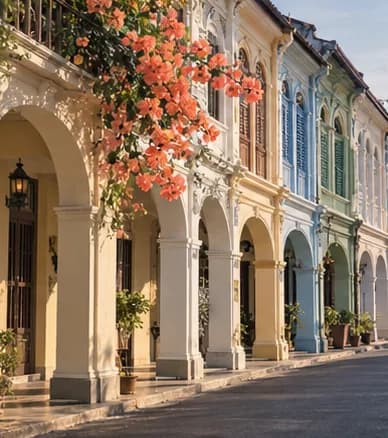
Many historic shophouses, buildings with a shop on the ground floor, are protected and can only be restored under special rules.