Questions?
We reply within 24 hours, free of charge.
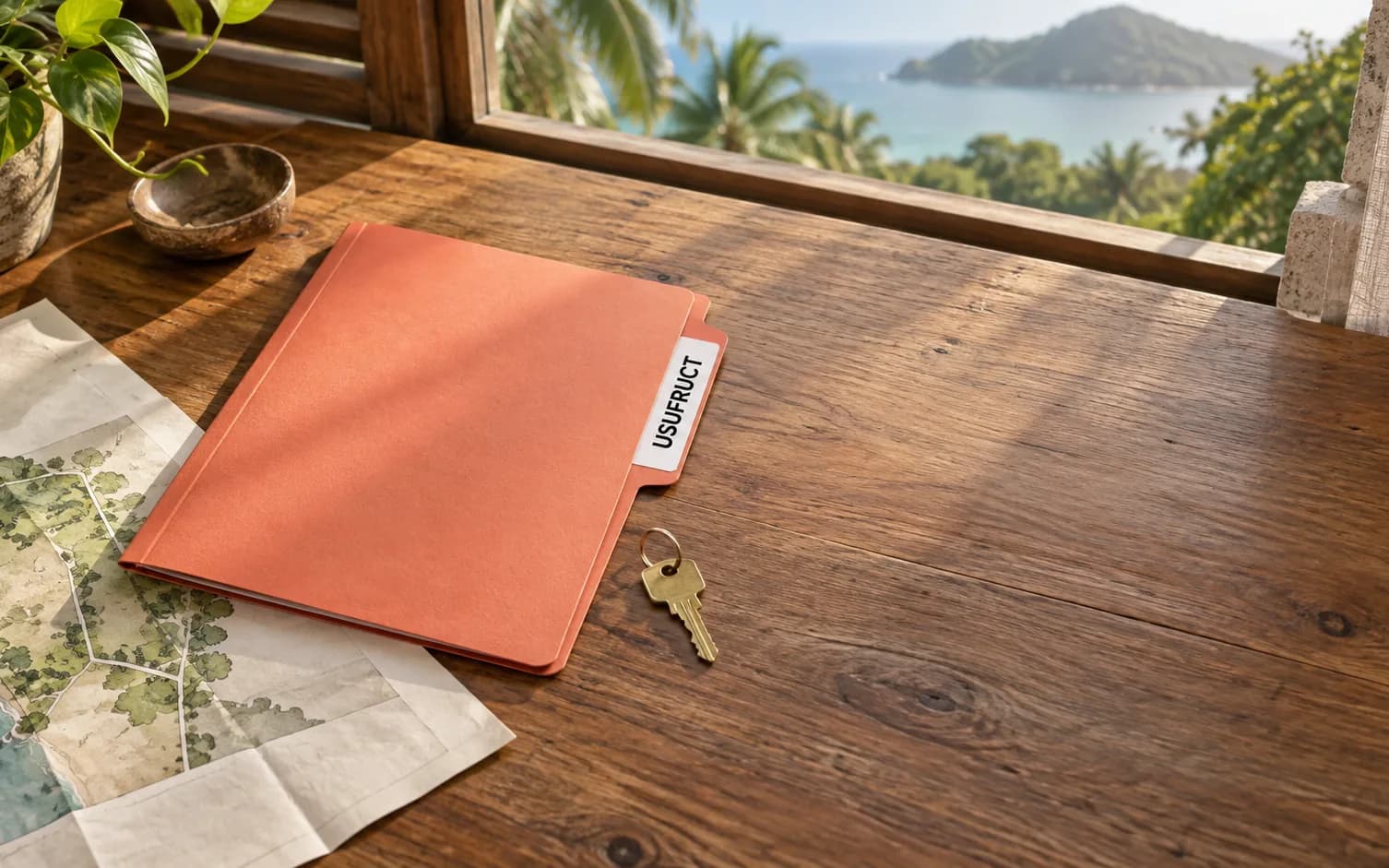
Usufruct is a registered right to use someone else's property, usually land or a house, and to take the income it produces, for life or for a term of up to 30 years (Civil and Commercial Code, sections 1417-1418). The Land Department registers it, and the person who granted it stays the legal owner throughout. For a foreign spouse or partner who cannot own Thai land directly, a usufruct is one of the lawful ways to hold a right over that property.
Where usufruct comes up
One example is land owned by a Thai spouse or long-term partner. Marriage gives a foreigner no right to Thai land: the Thai spouse can only buy land as separate property, and, as Thai embassies describe the practice, both spouses confirm this at the Land Office, declaring that the money is the Thai spouse's own. A usufruct registered in the foreign spouse's favour then gives a lawful, recorded right to live on that land and use the house on it, without registering the foreign spouse as the landowner; the usufruct is recorded on the Thai owner's title deed.
The second case is land or a house a foreigner wants a lasting right over outside marriage. Here a usufruct sits alongside a registered lease (leasehold), a superficies and a condo bought within the foreign ownership limit of 49% of the total floor area of all units in a registered condominium (Condominium Act, section 19 bis) as one of the lawful routes to land — see lawful routes to land in Phuket.
How it differs from a lease and superficies
| Right | What a foreigner gets |
|---|---|
| Leasehold | A registered lease of the land, one term of up to 30 years (CCC s. 540). For a buyer, this is the ordinary way to buy a villa in Phuket — not a tenancy in the everyday sense of the word. |
| Superficies | The right to own a building standing on someone else's land. |
| Usufruct | The right to use the property and take its income, for life or for up to 30 years. |
For the fuller picture of owning versus leasing, see freehold vs leasehold in Thailand.
What to check when it is registered
Before anything is signed, our lawyers check the title deed — a chanote or another land document, covered in Thai land title deeds: chanote and other titles — and confirm who the registered owner actually is. If the land is marital property, we check that both spouses have given their consent (CCC s. 1476). We also look at the term, for life or for a set number of years up to 30, and at whether the right is granted for payment or free of charge, since the registration fee differs between the two: the Land Department charges 1% of the payment when there is one, and THB 50 per plot when there is none.
Just as important is what the document says about income from the property, about buildings on it, and about how the right ends. We recommend writing these points into the usufruct agreement itself, rather than leaving them to be assumed.
Send us the draft agreement and the title deed: we will review it and answer within 24 hours, with the cost agreed upfront. We can also handle the registration with the Land Department.
Phuket areas
The same laws apply across the island, but each area has its own particulars: what kind of property usually sells there, which documents prove rights to the land and what deserves a closer look before you buy.
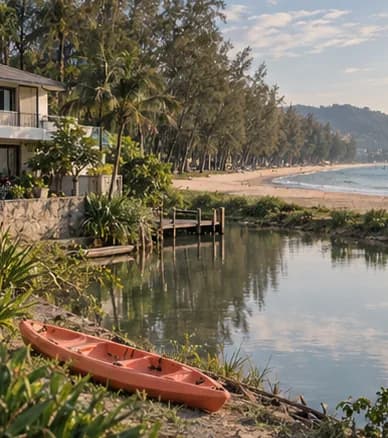
Bang Tao
There are many villas here, including in the Laguna complex, and most are bought on a leasehold, so our lawyers look first at the renewal terms in the contract.

Rawai
Many villas here are held through Thai companies, so we check whether the structure is lawful.

Chalong
Land here is held under different documents, from a Nor Sor 3, which gives only a right of possession, to a chanote, which confirms full ownership. That is why we start by checking which document has been issued for the plot.
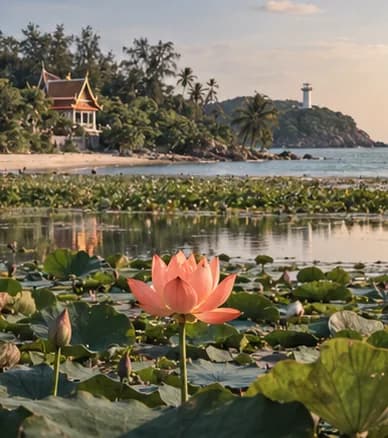
Nai Harn
Many villas here are in quiet spots, so before buying it is worth finding out how you get to the plot. If the road crosses a neighbour's land, we check whether a servitude, a registered right of way, is in place.