Questions?
We reply within 24 hours, free of charge.
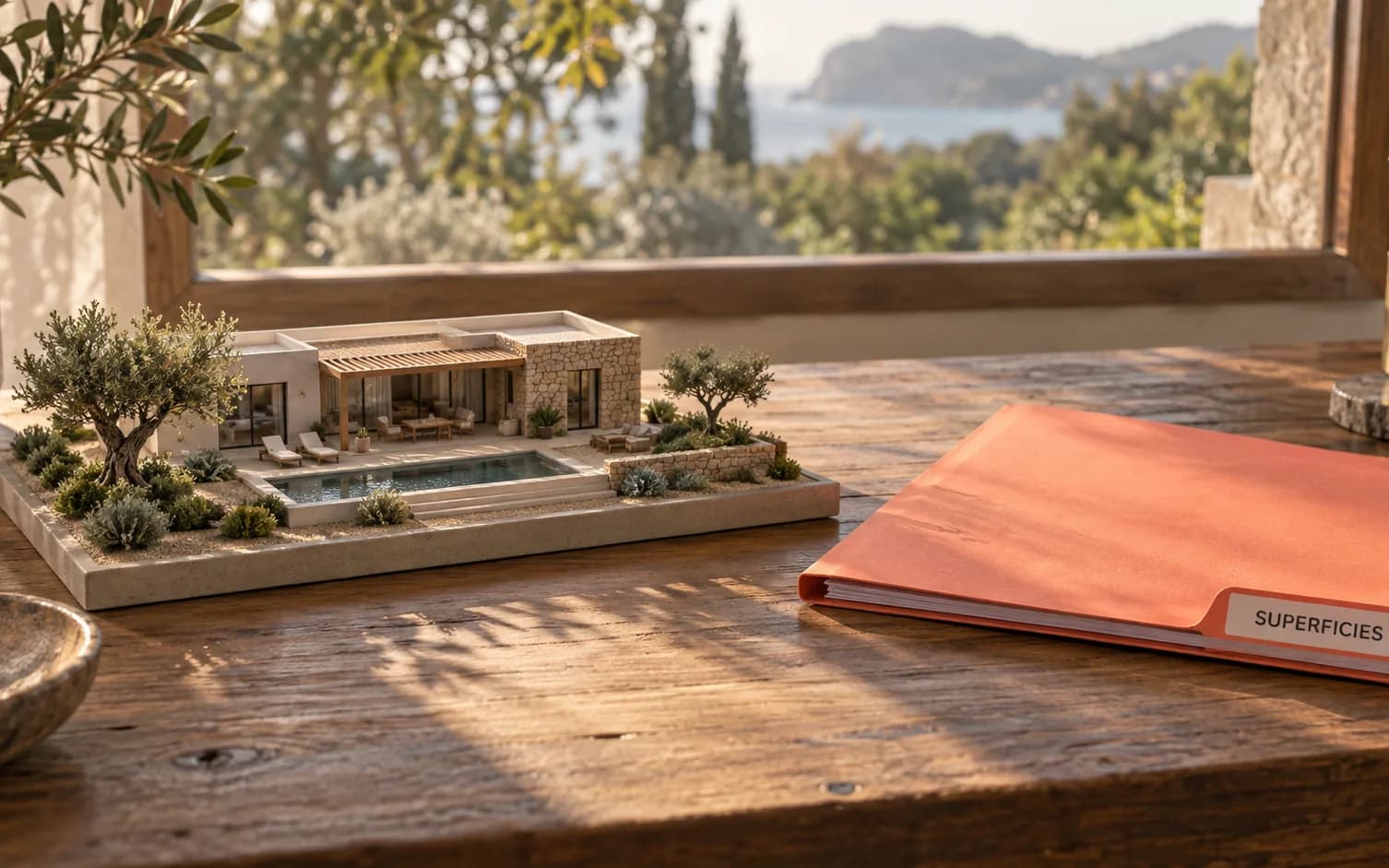
Superficies is a right, registered at Thailand's Department of Lands, to own a house or other building standing on land that belongs to someone else. A foreigner cannot own land in Thailand, but can own a building on it. In a leasehold villa purchase, a registered lease of the land can be paired with a registered superficies over the house: the land stays with its Thai owner, while the house is registered in the buyer's name.
Where superficies comes up
Superficies can form part of a leasehold villa package: one document registers the lease of the land, a second registers superficies over the house built on it. Check whether the developer's package includes both a registered land lease and a registered superficies. Check at the Land Office that both the lease and the superficies have been registered, not only signed privately into a contract. For how a leasehold villa purchase works overall, see a leasehold villa in Phuket and lawful routes to land in Phuket.
How it differs from usufruct and a lease
| Right | What it gives | Term |
|---|---|---|
| Lease (leasehold) | The right to use the land | A single term, up to 30 years |
| Usufruct | The right to use someone else's property and take its income | For life, or up to 30 years |
| Superficies | The right to own the building on someone else's land | Up to 30 years, or for the life of the right holder |
Thailand's Civil and Commercial Code sets the term and content of each right: lease in section 540, usufruct in sections 1417-1418, superficies in sections 1410-1416. These are three separate registered rights, and none is better than the others on its own — each answers a different question. We recommend registering the right to the house separately from the lease of the land, so it is clear what the buyer owns and on what basis. For a fuller comparison of ways to buy, see freehold or leasehold in Thailand.
What to check when it is registered
The registration fee is 1% of the value when superficies is granted for payment, or THB 50 per plot when it is granted without payment (Ministerial Regulation No. 47); ask the Land Office how the base value is worked out in your case.
If you already have a lease and superficies contract, send it to us — we provide a free preliminary review within 48 hours and flag any points that could become a risk.
Phuket areas
The same laws apply across the island, but each area has its own particulars: what kind of property usually sells there, which documents prove rights to the land and what deserves a closer look before you buy.
Bang Tao
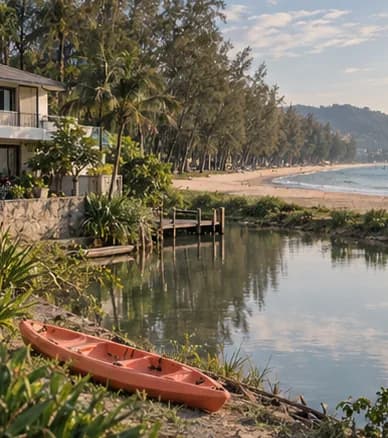
There are many villas here, including in the Laguna complex, and most are bought on a leasehold, so our lawyers look first at the renewal terms in the contract.
Rawai
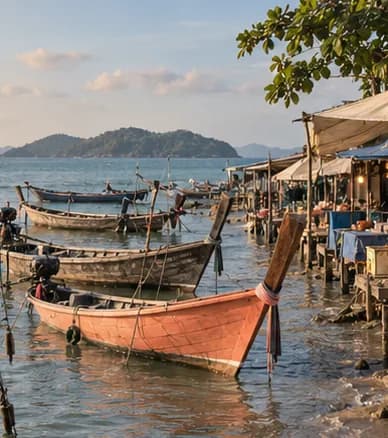
Many villas here are held through Thai companies, so we check whether the structure is lawful.
Chalong
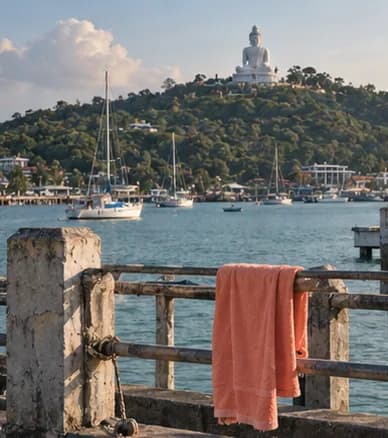
Land here is held under different documents, from a Nor Sor 3, which gives only a right of possession, to a chanote, which confirms full ownership. That is why we start by checking which document has been issued for the plot.
Nai Harn
Many villas here are in quiet spots, so before buying it is worth finding out how you get to the plot. If the road crosses a neighbour's land, we check whether a servitude, a registered right of way, is in place.