Questions?
We reply within 24 hours, free of charge.
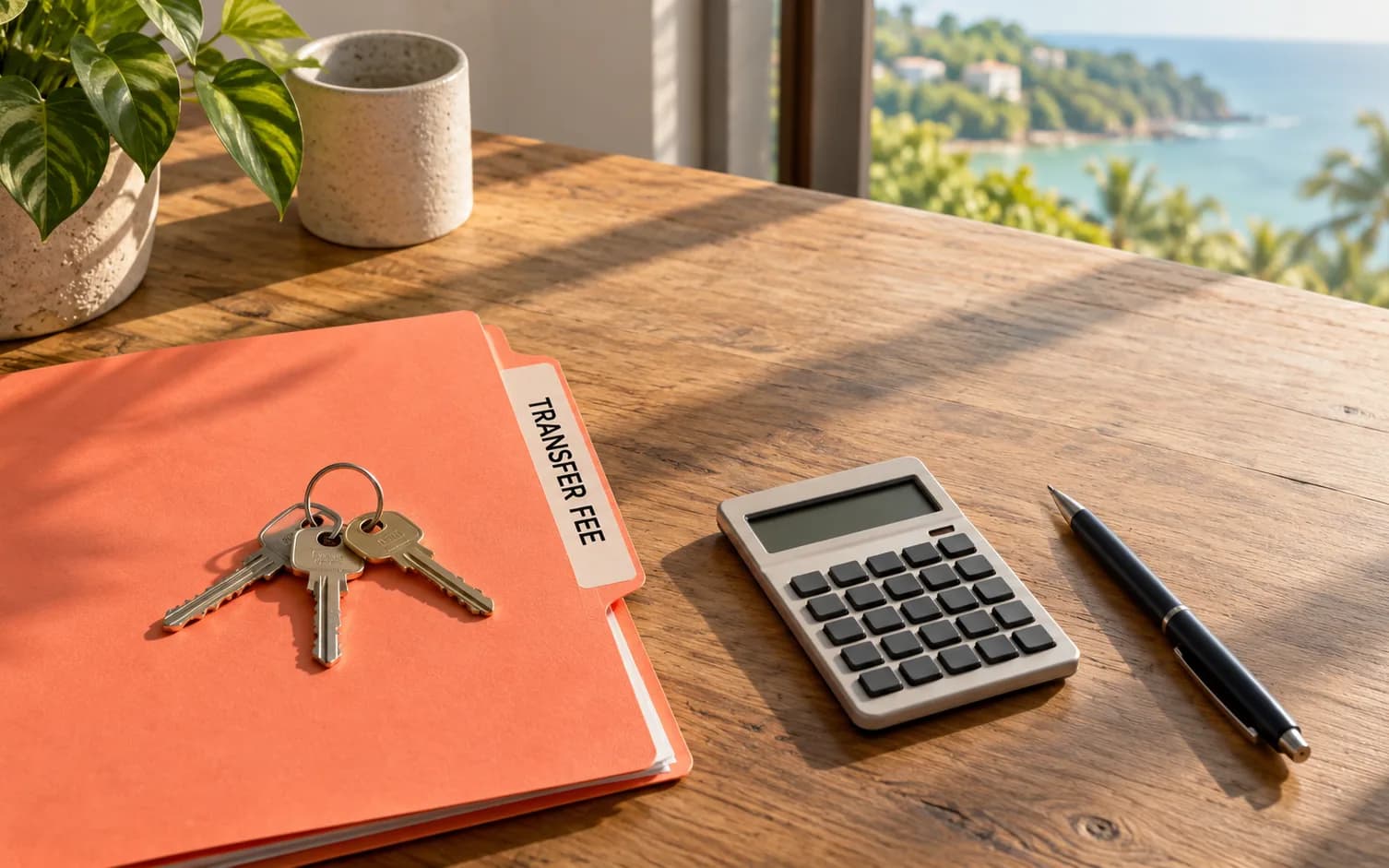
The transfer fee is a government charge of 2% of a property's official assessed value, collected by the Land Office (Thailand's land registry, run by the Department of Lands) when it registers a change of ownership of land, a house or a condominium unit. It is worked out from the government's assessed value, not from the price written in your contract — a detail that catches out many buyers used to fees based on the purchase price. You pay it on the day of registration, alongside any taxes the seller owes.
Where the 2% fee comes up
The 2% fee applies to a sale of a condo, house or land, and to most gifts of property. Under the Department of Lands registration-fee rules, gifts between ascendants and descendants — including grandparents and grandchildren — or between spouses attract a 0.5% fee instead. Other Land Office fees use different bases: registering a mortgage costs 1% of the loan amount, capped at THB 200,000, and registering a long-term lease (leasehold) costs 1% of the total rent for the whole term plus 0.1% stamp duty. We cover every cost a buyer meets before registration in Thailand condo transfer fees and taxes 2026.
How it differs from the seller's taxes (SBT, stamp duty)
The transfer fee pays for the registration itself, not for the seller's profit. Separately, the Land Office calculates either Specific Business Tax (SBT) or stamp duty — never both — plus withholding tax on the seller's income.
| Charge | Base | Rate |
|---|---|---|
| Transfer fee | Assessed value | 2% |
| SBT | Higher of price and assessed value | 3.3% |
| Stamp duty (if SBT doesn't apply) | Higher of price and assessed value | 0.5% |
An individual seller owes SBT only if they sell within 5 years of buying and were not registered on the house book for at least a year; a company seller always owes it. Where SBT doesn't apply, stamp duty is charged instead. The 0.01% transfer-fee concession is restricted to Thai individual buyers of homes whose purchase price and assessed value are both no more than THB 7 million. Foreign buyers pay the standard 2%, with no equivalent relief. See taxes and fees when buying a condo for the full picture.
What to check in the contract: who pays
Buyer and seller can agree in the sale contract how to split the transfer fee. If the contract is silent, the cost is split equally, and on resales that 50/50 split is the common practice, while the seller usually carries SBT or stamp duty alone. Our lawyers check how your contract allocates the fee and the taxes before you sign, so an unusual clause doesn't surprise you later. If you'd like a second opinion, a property lawyer in Phuket can review the draft with you.
Send us your purchase or reservation contract and we'll review it free of charge within 48 hours, flagging how it splits the fee and taxes and what to ask the seller or developer.
Phuket areas
The same laws apply across the island, but each area has its own particulars: what kind of property usually sells there, which documents prove rights to the land and what deserves a closer look before you buy.
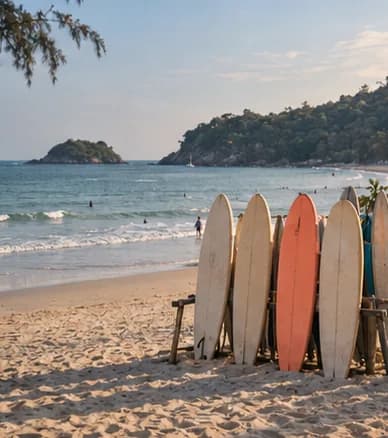
Kata
In sea-view condominiums the 49% foreign quota usually runs out quickly, so we check it before you reserve a unit.

Patong
People buy condos here to rent out and open businesses that need licences.

Kamala
There are many branded residences here, homes sold under a hotel brand, and the management agreement needs careful reading before you buy.
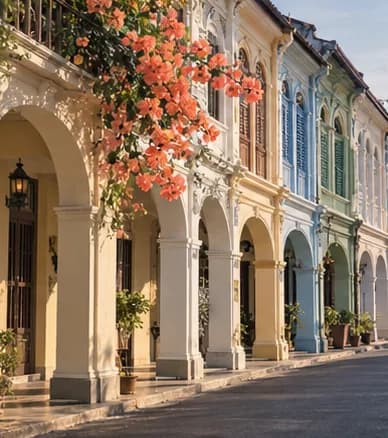
Old Town
Many historic shophouses, buildings with a shop on the ground floor, are protected and can only be restored under special rules.