Questions?
We reply within 24 hours, free of charge.
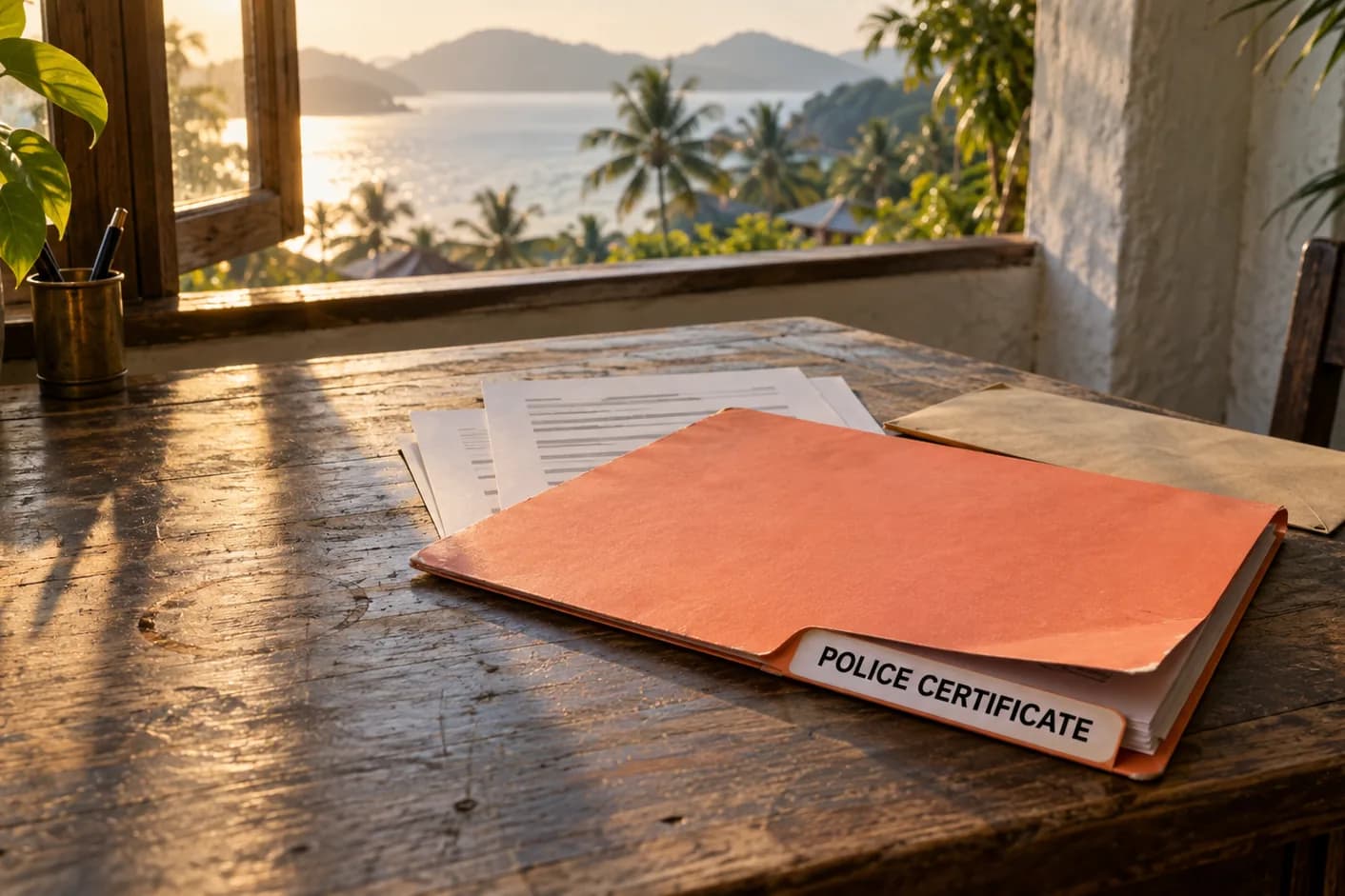
Typical situation assembled from practice; this is not an actual Lex Estate matter.
If the embassy rejects or queries your DTV police certificate, start by finding out exactly what it wants corrected, then compare the certificate with that embassy's own rules. A police certificate has been required for every DTV applicant since 31 August 2026, but each mission decides how recent it must be and how it should be certified. In this scenario our team helped the applicant rebuild the document file; the decision on the visa stayed with the embassy.
The request
The applicant received a query about the police certificate he had submitted. His first instinct was to order a new one straight away. He asked us whether that was necessary, or whether the existing certificate only needed a translation or certification fix.
We always start with two things: the full text of the notice and the current status of the application. A query about one document does not mean the visa has been refused, and it does not say which correction will satisfy the embassy. Both answers shape everything that follows.
What we found
The Royal Thai Embassy in London's announcement sets out the DTV document changes that took effect on 31 August 2026. A general DTV checklist does not answer every question about a particular application, so we read the announcement of the mission that actually handles the file.
A London example: the date is only one check
Suppose someone applying through London has a certificate issued four months ago and still receives a query. The date falls inside London's six-month window, so age is probably not the issue. Ordering a newer copy may not resolve the query; first identify what the embassy wants corrected. The useful step is to find the actual problem in the notice, which may concern translation, certification or something else the embassy expects.
The same logic works in reverse for anyone applying elsewhere. London's six-month period is not a general DTV rule, and we never carry one embassy's requirement over to another without checking.
What we did
First, our lawyers matched the notice against the certificate that had been sent. We separated what the embassy had actually asked for from the applicant's own guesses. Where the wording left room for doubt, the question went to the embassy before any new document was ordered.
Next, we checked the basis for applying in that country. As a general rule, you can only file a DTV where you are a national or a permanent resident. A query about the certificate does not change where you may apply, so we did not suggest moving the application to another embassy as a shortcut.
Then we checked the certificate's issue date, translation and certification against that mission's requirements. Legalisation needs its own date check. Thailand acceded to the Apostille Convention on 30 June 2026, and the HCCH status table shows it entering into force for Thailand on 28 February 2027, except in relations with any state that objects. Until then, the existing legalisation process applies where a document needs it. That does not mean every DTV certificate must go through the full chain; we confirm what the specific embassy asks for.
We recommend ordering a new certificate only when the query cannot be resolved without one. Finally, we checked that the corrected documents were consistent with each other. We then split the work into two lists: documents ready to send, and questions still waiting for an answer from the embassy.
For the full list of documents a DTV needs, see our guide to DTV requirements and documents. A different reason for rebuilding a file is covered in our typical case of a DTV refused over a bank statement.
The result
In this scenario, the applicant received a corrected document set and a clear list of next steps. Confirmation that the embassy accepted the documents, or issued the visa, is not part of the outcome. Preparation time depends on whether a new certificate, translation or certification is needed and on how quickly the embassy clarifies its requirements, so we do not quote a fixed number of days. We agree and fix the cost of support before any work starts: [price].
The takeaway
Every correction should answer a specific point the embassy raised and meet the rules of the mission that is considering your application. A replacement certificate helps if it addresses the issue identified by the embassy.
If you have received a query about your police certificate, send us the notice and a copy of the document. Our lawyers will read the wording and tell you what needs to change in your file. You can see how our support works on the page about DTV application support with a lawyer.