Questions?
We reply within 24 hours, free of charge.
Contents
- In short
- What "seasoning" the THB 800,000 means
- How long the money must sit before and after approval
- Can you withdraw part of it during the year
- THB 800,000, THB 65,000 a month, or a combination
- Bank letter and statement: what immigration checks
- Why immigration offices apply the rule differently
- What we can't confirm yet
- What's next

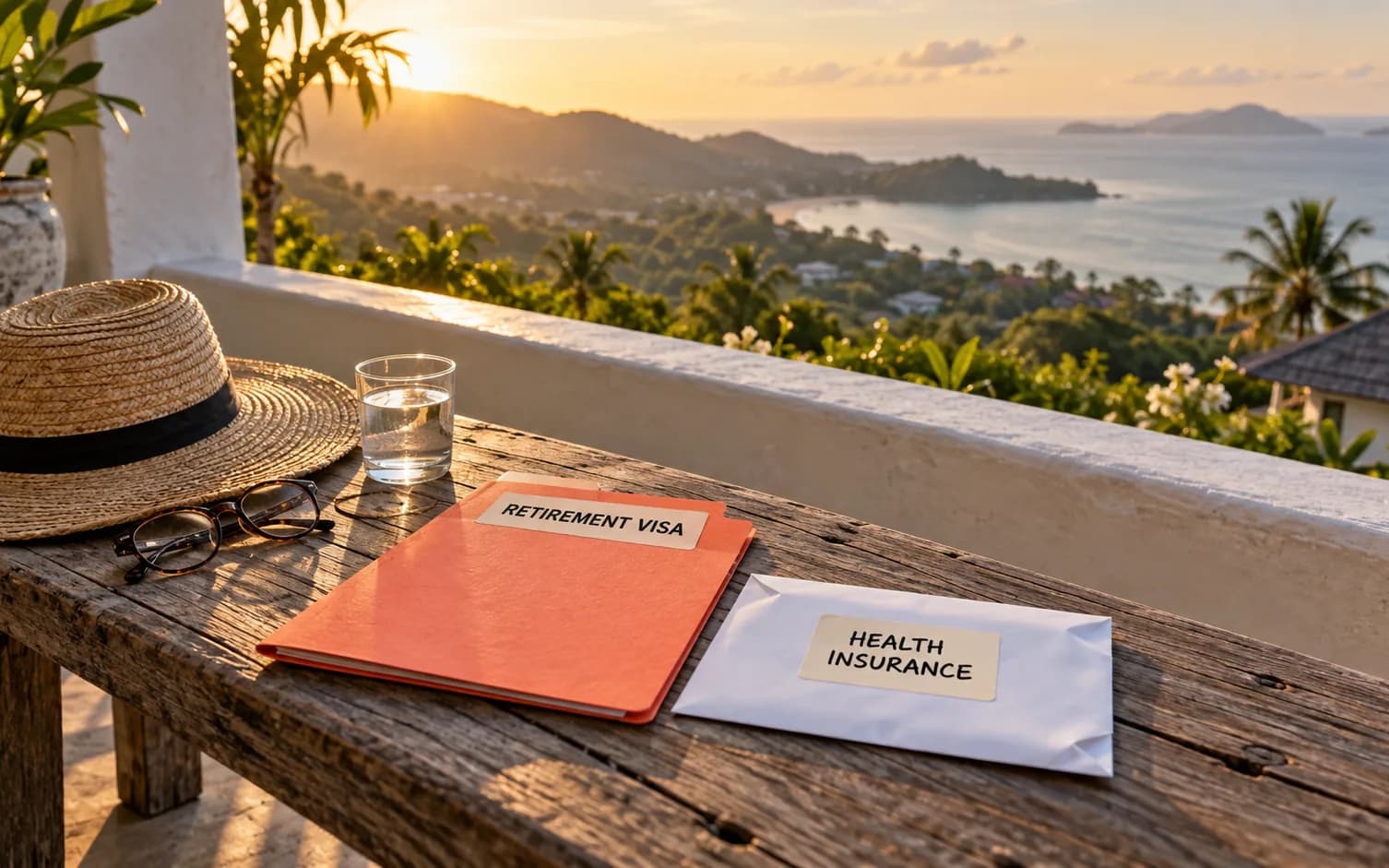
To extend your stay in Thailand on retirement grounds (age 50 or older), you need to show one of three things: THB 800,000 in a Thai bank account, a monthly income of THB 65,000, or a combination of the two that adds up to THB 800,000 a year. Thai law firms and immigration practitioners report that the THB 800,000 must sit in the account for at least 2 months before your first application and for 3 months before each annual renewal, and that after approval the balance must stay above THB 400,000. There is no official text we could check, so confirm these periods with your immigration office before you file.
In short
- Three ways to prove the money: a lump sum, a monthly income, or a mix of both.
- Before the first application: THB 800,000 in the account for at least 2 months.
- After approval: the balance stays above THB 400,000. Whether the full amount must stay untouched for a period first is office practice, so check before withdrawing.
- Before each renewal: THB 800,000 back in the account for 3 months.
- These periods come from Thai law firms and practitioners, not from an official text we could check.
- Confirm the required documents with the immigration office handling your application before you file.
What "seasoning" the THB 800,000 means
Immigration does not just want to see THB 800,000 appear in your account the week you apply. The money has to have sat there for a set period beforehand, which Thai immigration practitioners describe as the "seasoning" period. The point appears to be to show a settled retirement fund rather than money moved in for the application and out again afterwards.
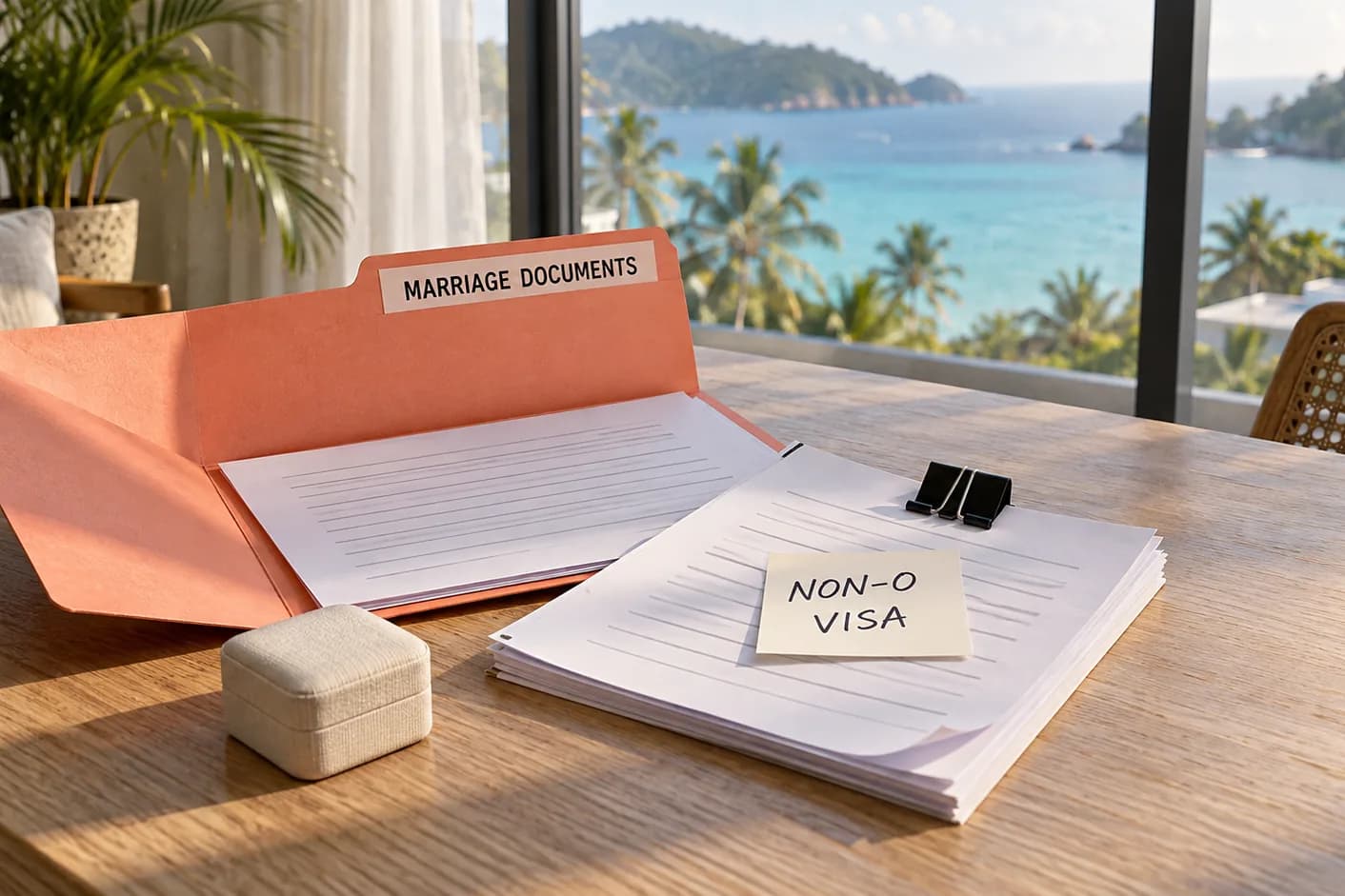
The rule applies to the in-country extension of stay for retirement, filed under the Non-Immigrant "O" category once you are 50 or older and already in Thailand. If you apply for a retirement visa abroad instead — the Non-Immigrant O-A, usually filed through a Thai embassy — the same money test applies, plus mandatory health insurance for the whole year. Since 31 August 2025, Thailand consolidated 17 Non-Immigrant visa categories into 7, including O-A and O-X into the broader "O" category together with the ordinary retirement extension; this is our reading of the reform, not something stated in an official text we found, and many guides and embassies still use the older names.
If you hold a passport from the UK, the US, Canada, Australia or one of a number of other countries, you may qualify instead for the O-X long-stay category, which uses different sums — THB 3,000,000 at first, with its own rules on how long that must stay and when it can be reduced toward THB 1,500,000 — and its own insurance rule. We compare the three categories in Thailand retirement visas: Non-O, O-A and O-X.
How long the money must sit before and after approval
| Stage | Requirement | Status |
|---|---|---|
| First application | THB 800,000 in the account for at least 2 months before filing | Practitioner reports, confirm with office |
| After approval | Balance stays above THB 400,000 | Practitioner reports, confirm with office |
| Right after approval | Whether the full THB 800,000 must stay untouched, and for how long | Office practice, confirm before withdrawing |
| Each annual renewal | THB 800,000 in the account for 3 months before filing | Practitioner reports, confirm with office |
This is the question that comes up most often: how soon after approval can the balance drop to THB 400,000? Thai law firms report that after approval the balance must stay above THB 400,000. Whether and for how long the full THB 800,000 must stay untouched after approval is a matter of immigration practice. Check with your office before you withdraw anything, and ask which documents it will want to see at the next renewal.
Can you withdraw part of it during the year
Yes, within limits. Thai law firms report that after approval the balance must stay above THB 400,000. Whether the full THB 800,000 must first stay untouched for a set period is immigration practice, so check with your office before you withdraw anything.
The bigger planning question is timing. If you draw the balance down, you need THB 800,000 back in the account, undisturbed, for three months before you file your next renewal, as practitioners report. A withdrawal that looks harmless early in the year can leave the account short of the required seasoning period before your next renewal.
THB 800,000, THB 65,000 a month, or a combination
You can meet the money test three ways:
- A lump sum. THB 800,000 held in a Thai bank account, seasoned as above.
- Monthly income. THB 65,000 a month in pension or other income. Which documents are accepted is not set out in an official text we found, so check with your embassy and immigration office before relying on a particular one.
- A combination. Monthly income plus a smaller deposit, as long as the two add up to THB 800,000 over the year.
As an illustration of the arithmetic only: THB 40,000 a month equals THB 480,000 a year; adding a THB 320,000 deposit gives the combined THB 800,000. This calculation alone does not establish eligibility. Confirm with the Immigration Bureau — before you choose this combination and file your application, not only before you later withdraw anything — whether that particular deposit is acceptable and what balance must be kept before and after approval.
No official text we could check sets seasoning rules for the deposit part of a combination. Confirm with your immigration office before you choose this route and file.
If part of the money you add to the account is new foreign income rather than savings already in Thailand, remember that remitting assessable foreign income earned from 1 January 2024 onward in a year when you were a Thai tax resident (180 days or more in Thailand that year) can trigger Thai tax; applicable exemptions and treaty relief need checking separately. That is a separate question from the visa test, but it is worth checking before you move a large sum in.
Bank letter and statement: what immigration checks
Ask your immigration office which bank documents it requires, including whether you need a balance letter and an account statement, what period it must cover and how recent the documents must be.
We have not found an official text setting out exactly how recent the letter must be, how long it stays valid, or whether a bank must issue it on a particular form. Thai banks that deal with retirement extensions regularly tend to know what their local immigration office expects, so asking the bank branch directly, and asking the office if you are unsure, is more reliable than guessing from general advice online.
A simple order of operations:
- Three months before a renewal filing (two before a first application), or a little earlier for a margin: confirm the balance is already at the required level and stop planning large withdrawals.
- A few weeks before: ask your bank what letter and statement it can provide, and confirm with your office how far back the statement should go.
- The day before you file: check the letter's date and the account balance one more time, since a weekend transfer or a bank fee can move the number.
Why immigration offices apply the rule differently
The money thresholds (THB 800,000, THB 65,000 a month, THB 400,000 after approval) have not changed in 2025 or 2026, as Thai law firms and press report. The seasoning periods come from practitioners, not from an official text we could check. What varies is how strictly, and with what extra paperwork, a given office applies them. Confirm with your own office the statement period it expects and how recent the bank letter must be; we have not found a single public circular covering this, so treat local practice as something to check directly rather than assume.
Thailand consolidated 17 Non-Immigrant categories into 7 on 31 August 2025, folding O-A and O-X into the broader "O" category alongside the ordinary retirement extension; reports on the reform say it does not change eligibility or applicants' rights. We have not found a source linking that reform to differences in how local offices apply the bank-document requirements. If your extension is coming up, our visa extension at Phuket immigration page covers how the local office handles filings day to day.
What we can't confirm yet
- Whether a foreign-currency account can be used instead of a Thai-baht account.
- The exact form and validity period a bank letter needs.
- Whether, and for how long, the full THB 800,000 must stay untouched after approval.
- How the seasoning rules apply to a deposit smaller than THB 800,000 in a combined application.
- Office-specific figures, including any extra requirements at Phuket immigration.
What's next
If your renewal date is approaching, write to us in Telegram or WhatsApp. We answer within 24 hours with what needs doing, how long it will take and what it will cost, and the fee stays fixed once we agree it. Our retirement visa support in Phuket page covers the full process.
Once the extension itself is settled, keep the paperwork that comes with living here moving too: your landlord's address notification and your 90-day report run on their own clocks, separate from your visa renewal date.