Questions?
We reply within 24 hours, free of charge.
Contents
- In short
- What licence do foreigners need in Thailand?
- What do UK, US and Australian licence holders need?
- How long can you drive on an International Driving Permit?
- How do you get a Thai driving licence?
- How much does a Thai driving licence cost?
- What is the fine for riding without a helmet or a licence?
- What does insurance cover after a motorbike crash?
- What next
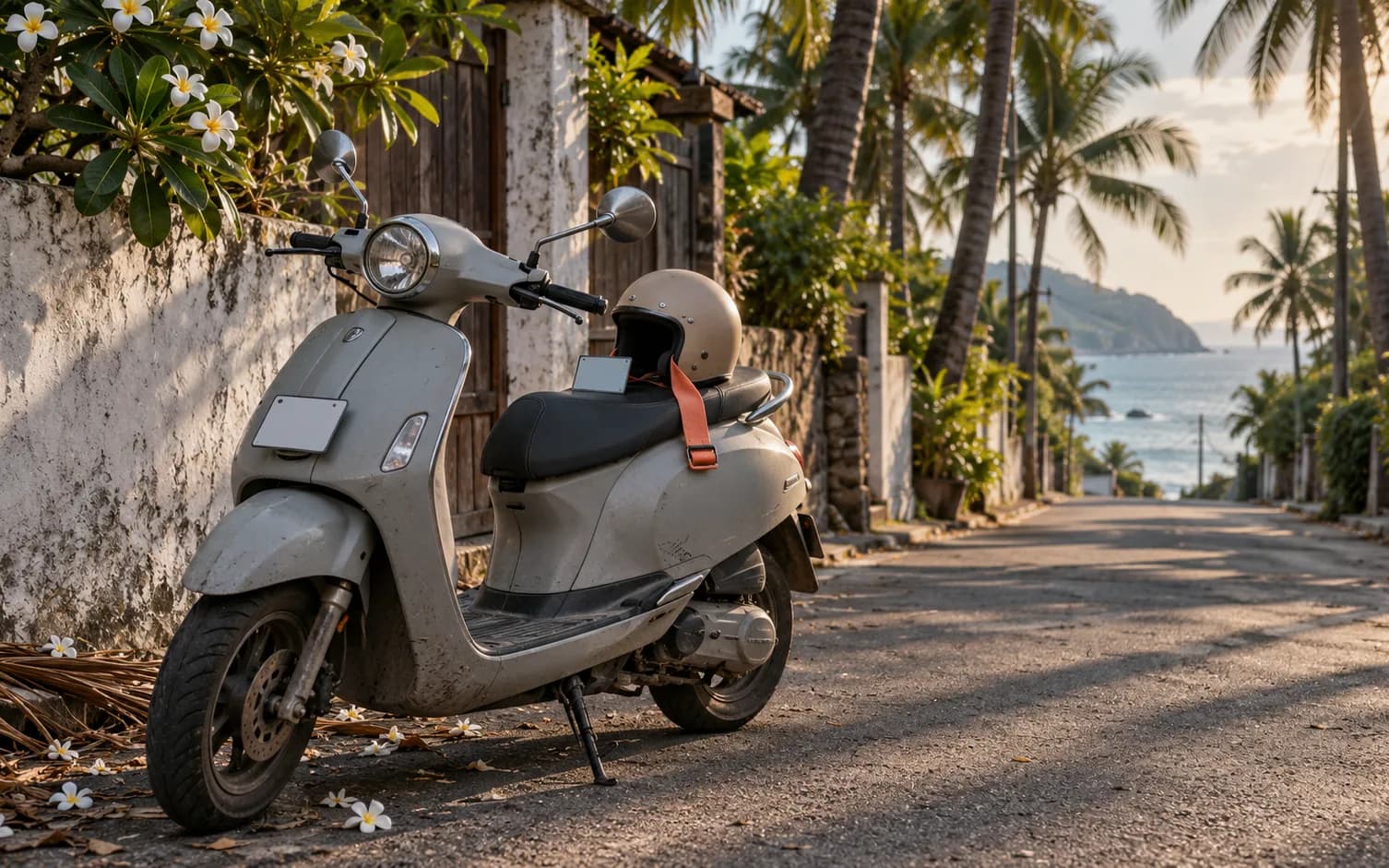
A tourist can drive on a valid home licence plus an International Driving Permit (IDP) for the same vehicle class. If you live in Thailand for 60 days or more on a non-tourist visa, you need a Thai licence from the Department of Land Transport (DLT). The DLT generally does not accept a tourist visa or a visa-exemption stamp. Rules and figures are as of 6 October 2026.
In short
- A short trip: your home licence plus an IDP. Motorbikes and cars are separate classes, and the class you ride must appear on both documents.
- How long you can rely on an IDP after you arrive is disputed. Sources say 60 days, 90 days (beyond which an IDP is legally questionable) or up to six months, and we found no official text.
- Living here 60 days or more on a non-tourist visa means a Thai licence.
- The route: a certificate of residence from immigration or your embassy, a medical certificate under 30 days old, then a 50-question theory test with a pass mark of 45.
- Riding without a helmet costs up to THB 2,000 (about USD 60 or GBP 45). The fine for riding without a licence is reported inconsistently.
- Without the right licence class, your insurer may refuse to pay after a crash.
What licence do foreigners need in Thailand?
It depends on your visa and how long you stay. A short trip needs your home licence and an IDP for the right class. Living in Thailand 60 days or more on a non-tourist visa means a Thai licence. The DLT generally rejects a tourist visa or visa-exemption stamp (TheThailandLife, 5 May 2026; TDL Service, 15 February 2026).
| Your situation | What you need | What to note |
|---|---|---|
| A holiday of 1 to 4 weeks | Home licence and an IDP | The class you ride must be on both documents |
| Visa exemption or tourist visa, staying longer | A Thai licence is not available | The DLT generally does not accept that status |
| Non-tourist visa, 60 days or more | A Thai licence | Certificate of residence, medical certificate, theory test |
| DTV | We found no written rule | Ask immigration and your DLT office before you go |
What do UK, US and Australian licence holders need?
GOV.UK tells British visitors to carry both the 1968 version of the IDP and their UK licence while driving. An IDP translates your home licence, so it carries only the classes you already hold: a car licence gives you no motorbike entitlement. Americans and Australians should ask their issuer which classes the permit will carry.
Insurers follow the same rule. GOV.UK warns that many travel policies expect the correct licence for the vehicle you ride, and that driving without a valid licence can void your cover. If your home licence has expired, the IDP is worthless, and a car-only permit does not cover a motorbike (TDL Service, 2 April and 6 March 2026). A licence that is not in English needs a certified translation.
How long can you drive on an International Driving Permit?
The sources give no single period. TheThailandLife (5 May 2026) says an IDP usually works for up to six months after you enter Thailand, terms.law (December 2025) calls relying on one after 90 days on a non-tourist visa legally questionable, and the Jonesy in Thailand blog (2022) gives 60 days. We found no statute or DLT notice that settles it.
If you plan to stay beyond a couple of months, plan for a Thai licence. A cautious rule is the shortest period named: 60 days from entry. An IDP never replaces your home licence, because it works only alongside a valid one.
How do you get a Thai driving licence?
Start with a certificate of residence and a medical certificate, then go to a DLT office for an eyesight and reaction check and the theory test. The 50-question test is now mandatory for every foreign applicant, including holders of foreign licences, and the pass mark is 45. Some offices add a practical test (TheThailandLife, 5 May 2026).
- Certificate of residence. Get it from an immigration office or your embassy. Bring your passport with the visa and entry stamp, a photo and proof of your address. TDL Service (15 February 2026) says your TM30 must be on file, and puts the cost at THB 200 to 500 and the time at one to two working days.
- Medical certificate. Any Thai clinic or hospital can issue it, and it must be no more than 30 days old when you apply. Expect THB 100 to 500.
- Photos, passport and visa copies, and your home licence. A licence that is not in English needs a certified translation.
- The DLT office. You fill in the form, take eyesight and reaction checks (the exact set varies by office), then sit the theory test, offered in Thai and English. The DLT has an online course for preparation. Some offices then add a practical test.
- Fee and card. Car and motorbike licences are issued separately, and the class on the Thai card decides what you may ride. The first card is usually temporary for two years, and a five-year card follows. The term depends on your visa and the office.
How much does a Thai driving licence cost?
Government fees are small: THB 205 for a temporary car licence, THB 105 for a motorbike, THB 505 and THB 255 for the five-year versions. With the certificate of residence and the medical certificate, plan on roughly THB 400 to 1,500 per class, before translation and travel (TheThailandLife, 5 May 2026; TDL Service, 15 February 2026).
| Item | THB | About USD | About GBP |
|---|---|---|---|
| Certificate of residence | 200 to 500 | 6 to 15 | 4.5 to 11 |
| Medical certificate | 100 to 500 | 3 to 15 | 2 to 11 |
| Temporary licence, motorbike / car | 105 / 205 | 3 / 6 | 2.4 / 4.6 |
| Five-year licence, motorbike / car | 255 / 505 | 8 / 15 | 6 / 11 |
Conversions are rounded and use about THB 33 per USD and THB 44.6 per GBP, the September 2026 averages on x-rates.com; rates move. Treat all figures as guides, not a price list, because they vary by office.
What is the fine for riding without a helmet or a licence?
Riding without a helmet costs up to THB 2,000, about USD 60 or GBP 45 (Thairath, 29 March 2026), and the helmet rule covers the rider and any passenger (drivinginthailand.com). Sources disagree on the maximum fine for riding without a licence: about THB 1,000 against THB 10,000. We have not read the statute, so we do not give a single figure.
The lower figure comes from drivinginthailand.com, which says its numbers come from translations it could not check against the current Royal Gazette text, so they are approximate ceilings, and which adds up to a month in jail. The higher figure comes from TDL Service's note on the April 2026 road checks (2 April 2026). The helmet fine follows Amendment No. 13 to the Land Traffic Act, in force since 5 September 2022 (drivinginthailand.com).
What does insurance cover after a motorbike crash?
Travel policies often tie cover to the licence class you ride, and GOV.UK says that driving without a valid licence can invalidate your travel insurance. Read the exclusions in your policy before you ride. Do not assume the compulsory insurance on a rental bike will cover your medical bills in full.
That compulsory cover, Por Ror Bor, pays only for injury and death, not for repairs or property. It pays up to THB 30,000 for treatment and THB 35,000 for death or disability without proof of fault (roughly USD 900 and USD 1,050), and up to THB 80,000 and THB 500,000 once fault is established (Motorist, 14 January 2026). A serious injury costs more, so you need a voluntary policy that names motorbikes.
After a crash, call the police and an ambulance, photograph the scene and the other party's documents, and get a copy of the police report, because your insurer will ask for the photos and the report. Before you ride off on a rental scooter, run through a short list:
- your licence and your IDP both show the motorbike class;
- the rider and any passenger wear helmets;
- the rental bike has valid compulsory insurance, and your own policy does not exclude motorbikes;
- you leave a copy of your documents or a cash deposit, not your original passport;
- the police and insurer numbers are saved in your phone.
What next
A Thai licence follows the right visa. The options for staying are on Stay in Thailand longer than 30 days and the DTV visa for Thailand pages, and you can compare every visa in Thailand visa options in 2026. The certificate of residence needs a confirmed address, which is the subject of TM30 and the 90-day report. For a full move, begin with Moving to Phuket in 2026. Anyone who entered on the exemption and needs more time can read the case A 30-day exemption extended in Phuket in one visit. For help with a visa or documents, describe your situation in the form on any of these pages.
Rules checked as of 6 October 2026.